The One Thing Every Homeowner Needs To Know About a Recession

The One Thing Every Homeowner Needs To Know About a Recession

The One Thing Every Homeowner Needs To Know About a Recession | MyKCM

A recession does not equal a housing crisis. That’s the one thing that every homeowner today needs to know. Everywhere you look, experts are warning we could be heading toward a recession, and if true, an economic slowdown doesn’t mean homes will lose value.

The National Bureau of Economic Research (NBER) defines a recession this way:

“A recession is a significant decline in economic activity spread across the economy, normally visible in production, employment, and other indicators. A recession begins when the economy reaches a peak of economic activity and ends when the economy reaches its trough. Between trough and peak, the economy is in an expansion.”

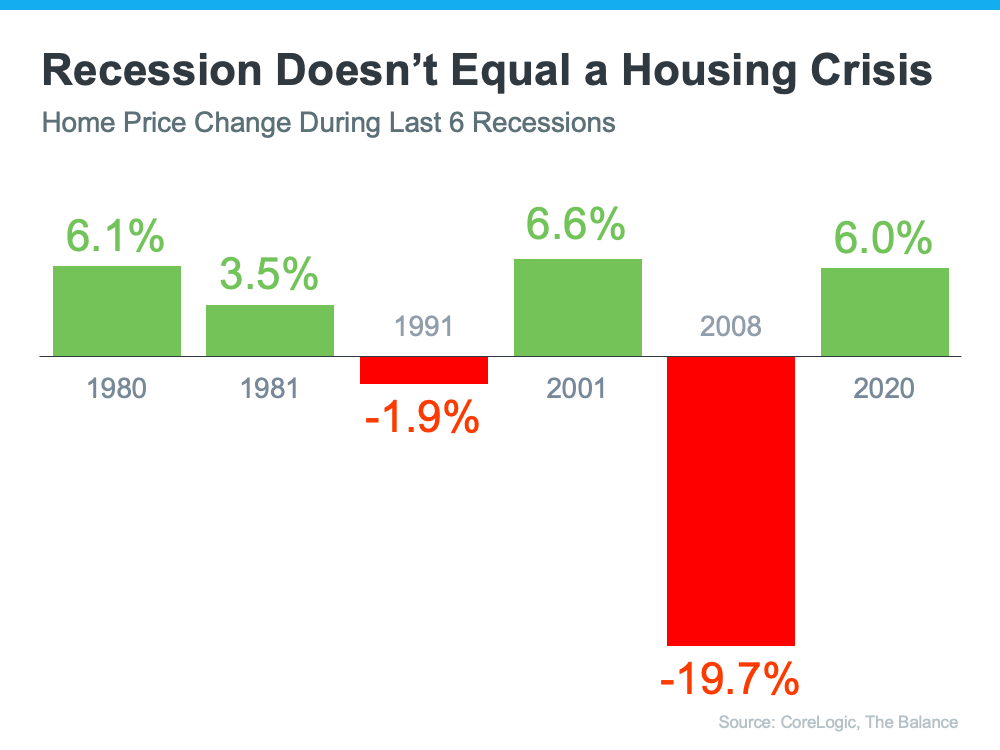
To help show that home prices don’t fall every time there’s a recession, take a look at the historical data. There have been six recessions in this country over the past four decades. As the graph below shows, looking at the recessions going all the way back to the 1980s, home prices appreciated four times and depreciated only two times. So, historically, there’s proof that when the economy slows down, it doesn’t mean home values will fall or depreciate.
The One Thing Every Homeowner Needs To Know About a Recession | MyKCM

The first occasion on the graph when home values depreciated was in the early 1990s when home prices dropped by less than 2%. It happened again during the housing crisis in 2008 when home values declined by almost 20%. Most people vividly remember the housing crisis in 2008 and think if we were to fall into a recession that we’d repeat what happened then. But this housing market isn’t a bubble that’s about to burst. The fundamentals are very different today than they were in 2008. So, we shouldn’t assume we’re heading down the same path.

Bottom Line

We’re not in a recession in this country, but if one is coming, it doesn’t mean homes will lose value. History proves a recession doesn’t equal a housing crisis.

Today’s Home Price Appreciation Is Great News for Existing Homeowners

Today’s Home Price Appreciation Is Great News for Existing Homeowners

Today’s Home Price Appreciation Is Great News for Existing Homeowners | MyKCM

If you’re planning to sell your home this season, rising prices are great news for you. But it’s important to understand why prices are rising to begin with. One major factor is supply and demand.

In any industry, when there are more buyers for an item than there are of that item available, prices naturally rise. In those situations, buyers are willing to pay more to get the product or service they’re looking for when options are scarce. And that’s exactly what’s happening in the current real estate market.

Selma Hepp, Executive, Research & Insights and Deputy Chief Economist at CoreLogic, puts it like this:

With so few homes, buyers are once again left with fierce competition that’s driving the share of homes that sold over the listing price up to 66% . . . With the continued imbalance between supply and demand, home prices are likely to have another year of strong gains and are expected to average about 10% growth for the year.”

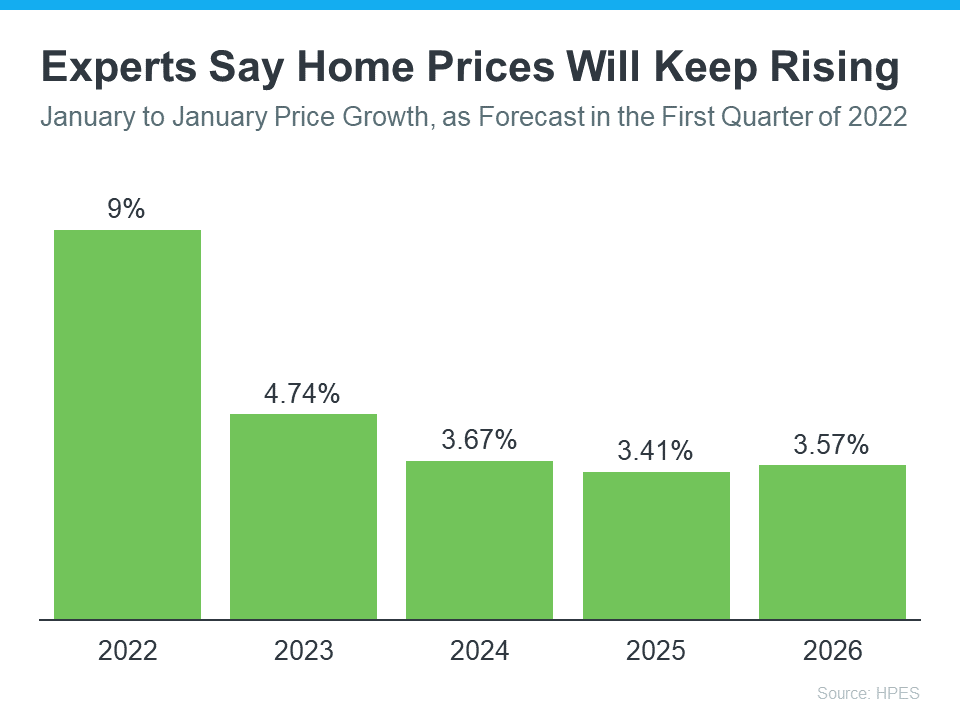
Because it will take some time for housing supply to increase, experts believe prices will continue rising. The latest Home Price Expectations Survey forecasts what will happen with home prices over the next 5 years. As the graph below shows, while the rate of appreciation will moderate over the next few years, prices will continue rising through 2026:

Today’s Home Price Appreciation Is Great News for Existing Homeowners | MyKCM

What This Means When You Sell Your House

If you’re a homeowner, the projection for continued price appreciation this year opens up an opportunity to move. That’s because it may give your equity a major boost. Equity is the difference between what you owe on your house and its market value. The amount of equity you have increases as you make your monthly payments and as rising home prices drive up the market value for your home.

Growing equity is a powerful tool for homeowners. When you sell your house, the equity you’ve built comes back to you in the sale. That money could be enough to cover some (if not all) of your down payment on your next home.

Of course, if you want to know how much equity you have in your current house, it’s crucial to work with a real estate professional. They follow current market trends and can help you understand your home’s value when you’re ready to sell.

What This Means for Your Next Purchase

But today’s rising home values aren’t just good news if you’re ready to sell. Because price appreciation is forecast to continue in the years ahead, you can rest assured your next home will be an investment that should grow in value with time. That’s one of several reasons why real estate has been rated the best investment in a recent Gallup poll.

Bottom Line

If you’re weighing whether or not you should sell your house this season, know rising home values may be opening up an opportunity to use equity to fuel your move. Let’s connect so you can find out how much your home is worth and to learn more about all the benefits you have in today’s market.

The Dream of Homeownership Is Worth the Effort

The Dream of Homeownership Is Worth the Effort

The Dream of Homeownership Is Worth the Effort | MyKCM

If you’re in the market to buy a home this season, stick with it. Homebuyers face challenges in any market, and today’s is no exception. But if you persevere, your decision to purchase a home will be worth the effort in the end. In fact, a recent survey from Bankrate shows homeownership is so powerful that:

Nearly three in four homeowners say they would still buy their current home if they had it to do [sic] all over again.”

That means the results – owning a home and the benefits that come with it – outweigh the effort needed to achieve their goal. If you’re a homebuyer, let that provide you with the confidence to know the work you’re putting in today will pay off for years to come. Here are a few reasons to stick with your search and focus on the outcome.

Homeownership Contributes Significantly to Your Financial Well-Being

The National Association of Realtors (NAR) lists several motivations to consider if you’re thinking about buying a home. One of the top financial reasons is the equity you build. As NAR says:

“Money paid for rent is money that you’ll never see again, but mortgage payments let you build equity . . . Building equity in your home is a ready-made savings plan.”

Your equity is a powerful tool you can leverage in a number of ways. And with recent home price appreciation, homeowners are seeing record levels of equity today. That may be one reason why so many people view owning a home as a great investment and a top indicator of financial well-being. As the survey from Bankrate mentioned above shows:

“. . . Americans place a higher value on homeownership than on any other indicator of economic stability, . . .”

Owning a home ranks above other major accomplishments like retirement, having a successful career, and getting a college degree. That indicates just how impactful the financial benefits of homeownership truly are.

The Emotional Benefits of Owning a Home Are Powerful

Of course, homeownership is more than an investment. In their list of top reasons to buy a home, NAR also highlights some of the powerful, non-financial aspects of homeownership. Among them is the opportunity to customize your home to reflect your personality and needs. As they say:

“The home is yours. You can decorate any way you want and choose the types of upgrades and new amenities that appeal to your lifestyle.”

Another benefit homeowners enjoy is the stability it provides. Homeowners typically stay put longer than renters. According to NAR, when you remain in one place longer than a few years, you can grow closer to your community. And that can enhance your sense of pride and lead to better relationships.

What Does That Mean for You?

The benefits of homeownership are powerful, as Leslie Rouda Smith, President of NAR, says:

“From building personal wealth and fostering communities, to strengthening social stability and driving the national economy, the value of homeownership is indisputable.”

Even if you face challenges in today’s market, the payoff when you succeed and purchase a home will be worth it.

Bottom Line

If you’re planning to buy a home this year, there are incredible benefits waiting for you at the end of your journey. Let’s connect to discuss everything homeownership has to offer.

Is It Enough To Offer Asking Price in Today’s Housing Market?

Is It Enough To Offer Asking Price in Today’s Housing Market?

Is It Enough To Offer Asking Price in Today’s Housing Market? | MyKCM

If you’re planning to buy a home this season, you’re probably thinking about what you’ll need to do to get your offer accepted. In previous years, it was common for buyers to try and determine how much less than the asking price they could offer to still get the home. The buyer and seller would then negotiate and typically agree on a revised price that was somewhere between the buyer’s bid and the home’s initial asking price.

In today’s real estate market, buyers shouldn’t shop for a home with the same expectations.

Things Are Different Today

Today’s housing market is anything but normal. According to the National Association of Realtors (NAR), the average home that’s sold today:

  • Receives 4.8 offers
  • Sells in just 17 days

Homes selling quickly and receiving multiple offers shows how competitive the housing market is for buyers right now. This is because there are more buyers on the market than homes for sale. When the number of homes available can’t keep up with demand, homes often sell for more than the asking price.

How Does This Impact You When It’s Time To Submit an Offer?

Market conditions should help guide your decisions throughout the process. Today, the asking price of a home is often the floor of the negotiation rather than the ceiling. Knowing this is important when it’s time to submit an offer, but you should also use that information as you’re searching for homes too. After all, you don’t want to fall in love with a home that ultimately sells for a price higher than what you’ve budgeted for.

The Mortgage Reports has advice if you’re looking to purchase a home in a competitive market. The article encourages you to be realistic with your housing search, saying:

The best thing to do is set your budget and expectations ahead of time so you know how much you can afford to offer — and when to walk away. This will make negotiations a lot easier.”

Of course, when you’ve found your dream home, you’ll want to do everything you can to submit your best offer up front and win a potential bidding war. Knowing the current market is key to crafting a winning offer. That’s where working with an expert real estate advisor becomes critical.

A real estate professional will draw from their experience and expert-level knowledge of today’s housing market throughout the process. They’ll also balance conditions in your area to make sure your offer stands out above the rest.

Bottom Line

Understanding how to approach the asking price of a home and what’s happening in today’s real estate market are critical for buyers. Let’s connect so we can work together to create a winning plan for you.

On the Fence of Whether or Not To Move This Spring? Consider This.

On the Fence of Whether or Not To Move This Spring? Consider This.

On the Fence of Whether or Not To Move This Spring? Consider This. | MyKCM

If you’re thinking of selling your house, it may be because you’ve heard prices are rising, listings are going fast, and sellers are getting multiple offers on their homes. But why are conditions so good for sellers today? And what can you expect when you move? To help answer both of those questions, let’s turn to the data.

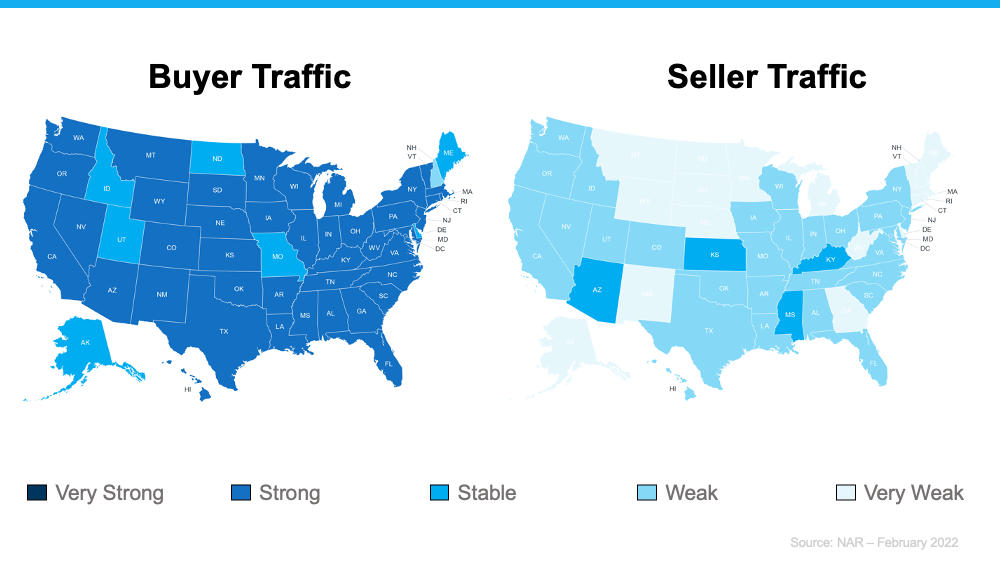
Today, there are far more buyers looking for homes than sellers listing their houses. Here are the maps of the latest buyer and seller traffic from the National Association of Realtors (NAR) to help paint the picture of what this looks like:

On the Fence of Whether or Not To Move This Spring? Consider This. | MyKCM

Notice how much darker the blues are on the left. This shows buyer traffic is strong today. In contrast, the much lighter blues on the right indicate weak or very weak seller traffic. In a nutshell, the demand for homes is significantly greater than what’s available to purchase.

What That Means for You

You have an incredible advantage when you sell your house under these conditions. Since buyer demand is so high at a time when seller traffic is so low, there’s a good chance buyers will be competing for your house.

According to NAR, in February, the average home sold got 4.8 offersWhen buyers have to compete with one another like this, they’ll do everything they can to make their offer stand out. This could play to your favor and mean you’ll see things like waived contingencies, offers over asking price, earnest money deposits, and more. Selling when demand is high and supply is low sets you up for a big win.

If you’re also looking to buy a house, you may be tempted to focus more on just the seller traffic map and wonder if it means you’ll have trouble finding your next home. But remember this: perspective is key. As Danielle Hale, Chief Economist at realtor.comsays:

The limited number of homes for sale is a lesson in perspective. This same stat that frustrates would-be homebuyers also means that today’s home sellers enjoy more limited competition than last year’s home sellers.”

If you look at the big picture, the opportunity you have as a seller today is unprecedented. Last year was a hot sellers’ market. This year, inventory is even lower, and that means an even bigger opportunity for you. Even though finding your next home in a market with low inventory can be challenging, is that concern worth passing on some of the best conditions sellers have ever seen?

As added peace of mind, remember real estate professionals have been juggling this imbalance of supply and demand for nearly two years, and they know how to help both buyers and sellers find success when they move. A skilled agent can help you capitalize on the great opportunity you have as a seller today and guide you through the buying process until you find the perfect place to call your next home.

Bottom Line

If you’re ready to move, you have an incredible opportunity in front of you today. Trust the experts. Let’s connect so you have expertise on your side that can help you win when you sell and when you buy.